Government intervention is very applicable to the operations of MTR. Considering that MTR's transportation system is used by the majority of the people in Hong Kong, and that it can transport over 70,000 people an hour during peak hours on weekdays on a single line; the firm has a very large influence on the lives of people in Hong Kong in terms of where they go and the accessibility of certain locations in Hong Kong. Thus, it is in the government's best interest to monitor and regulate MTR's business operations. | 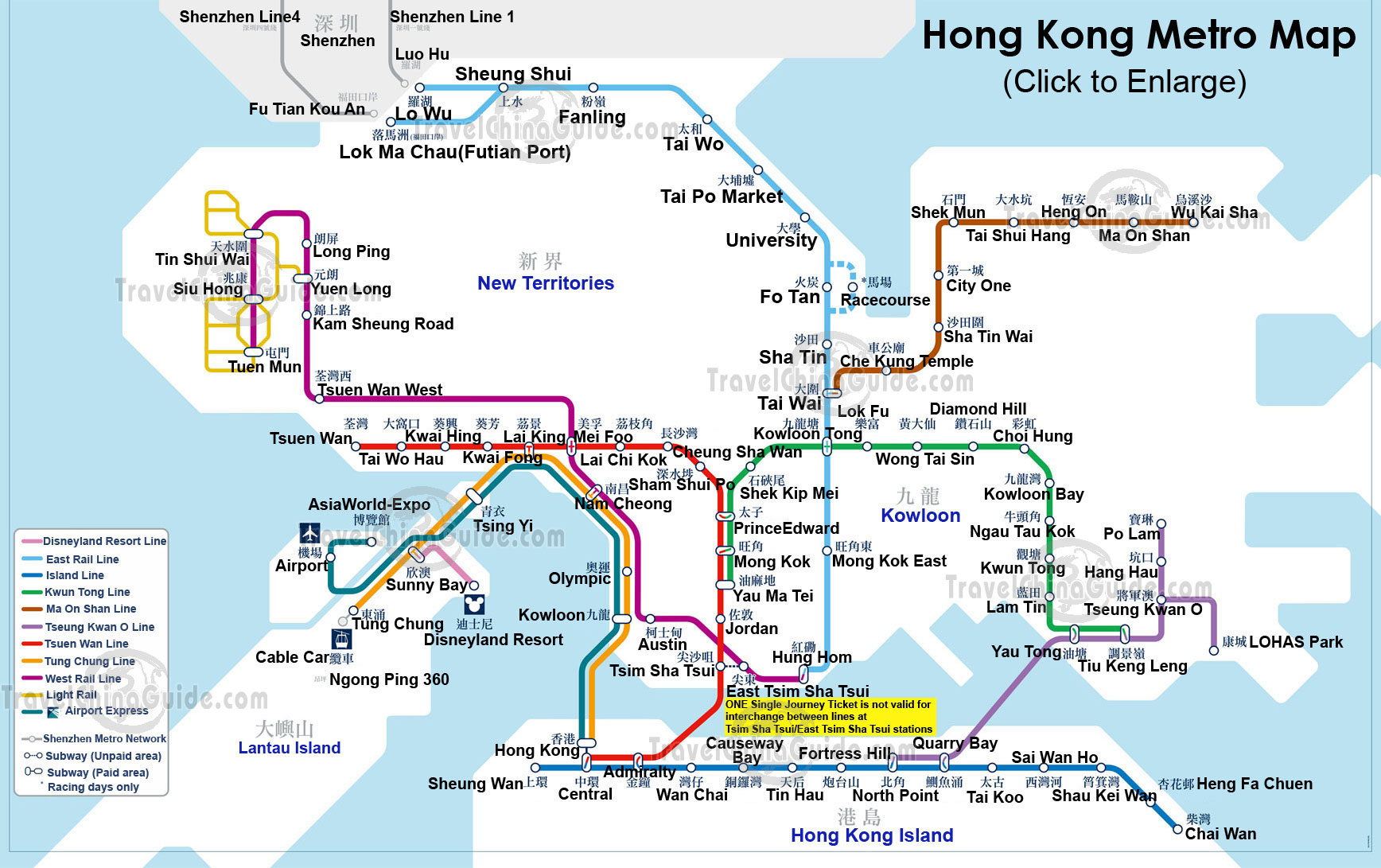 |
The government has a majority stake in the company.
It owns 77% of the shares, and the other 23% are owned by private investors. The government has pledged to "continue to hold at least 50% shareholding in the company for the next 20 years". This could be so that they are able to oversee new projects by the MTR, to control its prices and to prevent unethical business practices. Health and safety standards can also be ensured, and employment legislation upheld.
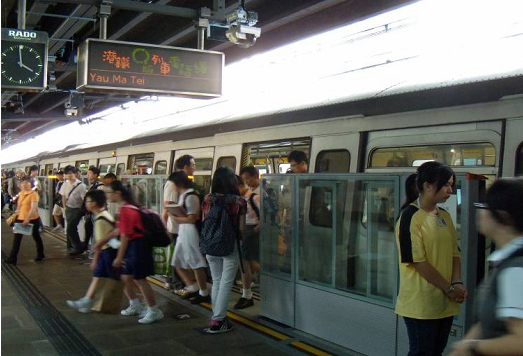 | Recently, there has been a new program by the MTR in collaboration with the government. to further provide employment by hiring people to stand in front of trains during peak hours and to help people get on and off the trains. This is an example of how the government influences business activity in the public's interest. Other examples include the investment in road and traffic development. MTR has recently begun the construction of railway lines into less populated residential areas such as Ho Man Tin and Aberdeen (where Ocean Park is). This will improve MTR's coverage in Hong Kong and helps people living in such areas commute more quickly and conveniently. |
 | The government also provides subsidies for MTR with their expansion of their railway network. In 2009, MTR was granted a 12.2 billion dollar subsidy for the construction of the new railway line that expanded into Tseung Kwan O and a new residential suburb, Lohas Park. If a subsidy is granted, ceteris paribus, the equilibrium price will decrease from P1 to P2, where the new equilibrium quantity,Q2, is both demanded and supplied. The area on the graph P1XWP2 represents the amount of money saved by consumers. Consumers will benefit more from the subsidy as the demand for MTR's services is relatively price inelastic, and also by the fact that the equilibrium price (the price that consumers pay) has decreased. However, they will increase their consumption of MTR's services because of the lower price, and is represented by the area Q1WZQ2 on the graph. There will still be an increase in total revenue for MTR from 0P1XQ1 to 0DTQ2 |
When deciding whether or not to provide a subsidy, the government will consider things such as opportunity cost, whether the subsidy will allow firms to be inefficient, and the taxpayers who fund the subsidy.
In the case of MTR however, it already operates as the sole rail transport provider in Hong Kong, and has no competition. Therefore, a subsidy would not allow it to operate further inefficiently as it is already operating under the conditions of a monopoly, and further inefficiency will not affect its market share. Furthermore, as the MTR is an integral part of Hong Kong people's daily lives, the taxpayers who fund the subsidy will most likely benefit from using MTR's services, and might not protest against the large amount of tax required to subsidise MTR for their new expansion plans.
The government also regulates MTR's ticket prices.
This is because it provides services to many people in Hong Kong every day and its demand is relatively price inelastic. The most recent example will be in April earlier this year, when the MTR proposed a 16% increase in ticket prices to address the rising costs of electricity and the increasing household income in Hong Kong. This has been approved by the government, and the price increase is to be implemented in June.
In the case of a ticket price increase, the government will review and assess the consequences of such an increase. Ceteris paribus, an increase in the price of train tickets would lead to a movement along the demand curve (from P1Q1 to P2Q2), and the demand would decrease. However, since the demand is relatively price inelastic, there will be a proportionately smaller decrease in demand than the increase in price. There is a huge amount of incentive for MTR to increase their prices to increase their total revenue, but this will have a significant impact on the level of disposable income that people in HK have because of the necessity of MTR's services. Therefore, the HK government must consider other factors such as Consumer Price Index (CPI) and the level of economic activity before approving a price raise. | 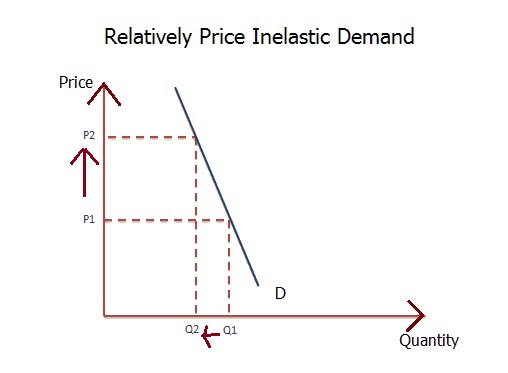 |
